
On December 8, 2025, our Founder and Executive Director spoke on the opening plenary, “They tried to bury us, they didn’t know we were seeds” at ReConference in Kathmandu, alongside some stellar feminists, leaders and visionaries. The plenary was a reminder to us why and how movements endure, are reimagined, and regenerated, even in the face of erasure. The hall was filled with over 450 feminists, changemakers and radicals from across the globe.
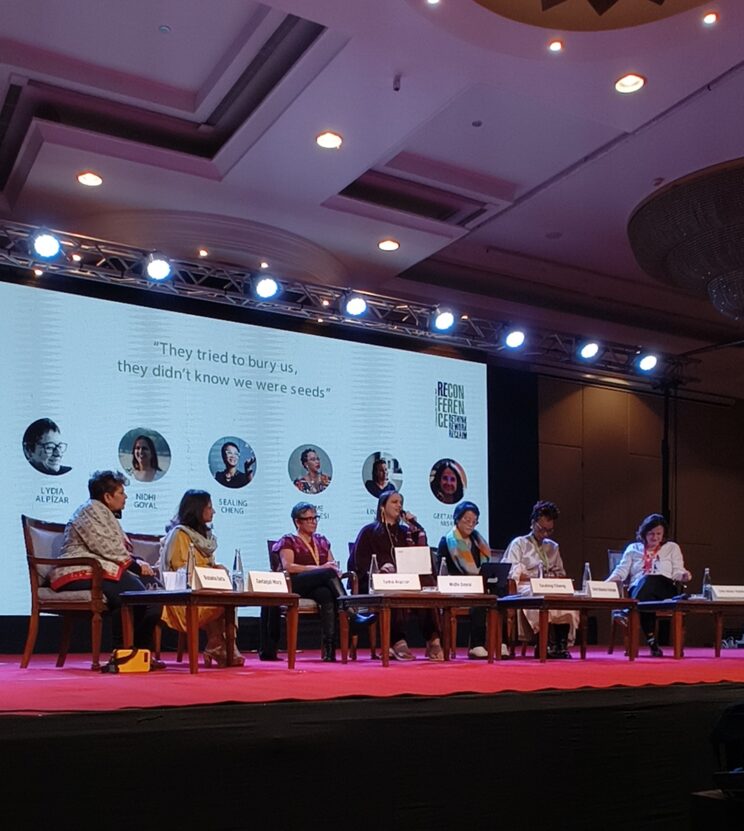
Nidhi Goyal spoke on the plenary alongside Bishakha Datta, Executive Director, Point of View; Lydia Alpizar, Co-Executive Director, IM-Defensoras; Lina Abou-Habib, Director, The Asfari Institute for Civil Society and Citizenship, American University of Beirut; Sealing Cheng, Associate Professor, Chinese University of Hong Kong; and Solome Nakaweesi, Pan-African feminist and CREA Africa advisor, and the session was moderated by Geetanjali Misra, Executive Director, CREA.
On the plenary, Nidhi shared how, in a workshop with young girls with disabilities, the simple invitation to share a dream was met with silence. She explained that this silence reflects where the “burial” often begins — in the erasure of imagination, possibility, and belonging. She highlighted the everyday ableism that shapes language, advocacy, and even rights-based movements. And she reminded the room: “We have never stayed buried. Every time we were silenced, we emerged louder… We rise. And we build this movement not only for ourselves, but for our collective future.”
Other speakers brought forward their lessons, wisdom from their work over the decades. Bishakha highlighted the realities of digital gender justice in a world where online violence quickly adapts to political shifts. She reminded us that movements continue to expand, as they reimagine spaces, including the sex workers’ movement.
Lydia focussed on Mesoamerica and women and human rights defenders facing threats, disappearance, and violence. Yet, she emphasised that movements survive because they reorganise, adapt, and keep nurturing new ways of resisting beyond failing neoliberal models.
Salome spoke from a pan-African feminist perspective, emphasising that communities keep coming back stronger despite attempts to erase them. “You can’t bury what knows how to grow,” she said, underscoring that movements remain resilient and adaptive. 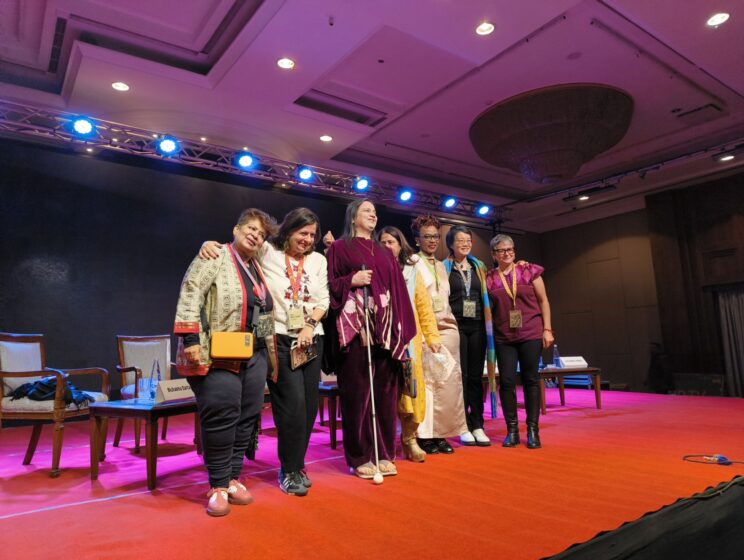
Lina grounded the discussion in global histories of violence, from Palestine to Armenia, and reminded us that despite decades of attempts to extinguish people and their movements, they continue to survive, resist, and organise.
The plenary closed with a shared understanding: we are not simply surviving; we are planting, growing, and reshaping the world we want to live in.