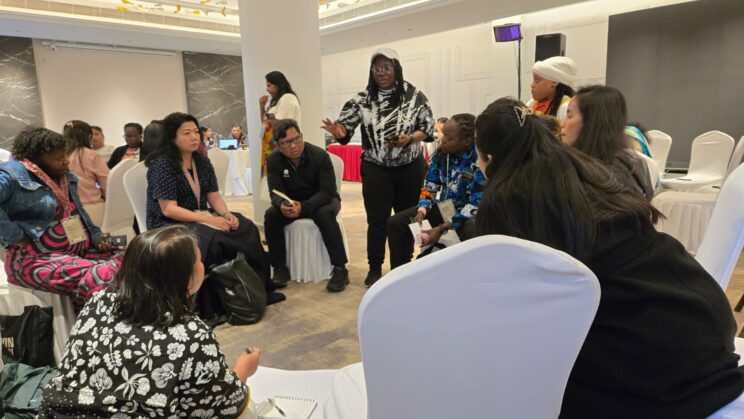
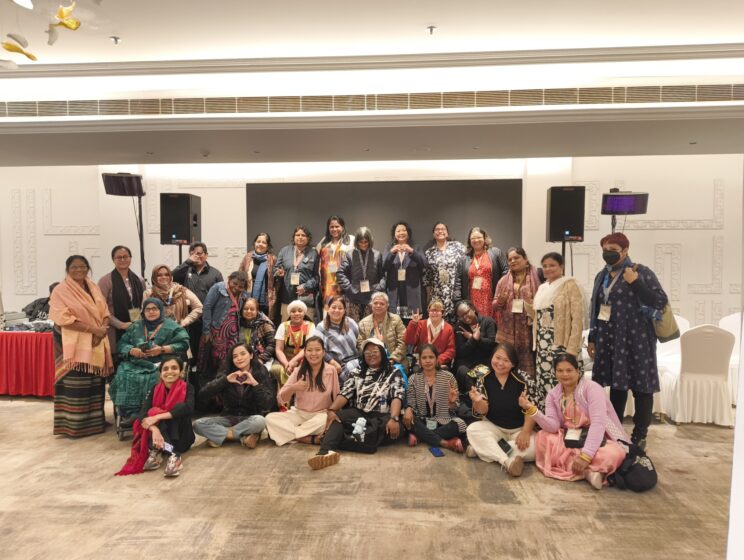
As the Thematic Partner for Ableism at ReConference 2025, a 3-day premier global feminist conference organised by CREA in Kathmandu, Nepal, we integrated critical discourse on disability justice and intersectional inclusion. The international conference, which took place at Soaltee, Kathmandu, was held between December 8 and 10, 2025 brought together around 500 feminists, activists, artists, radical leaders and feminist movement builders from all over the world, bringing disability justice, feminist resistance, and collective, radical care to the heart of our movements.
As thematic partners, we curated a video exhibit on resistance, organised a hands-on teach-in on deconstructing ableism, co-organised another teach-in on disability justice and co-facilitated strategy circles for the community.
‘Still We Rise’: A celebration of disabled resistance, joy, and imagination
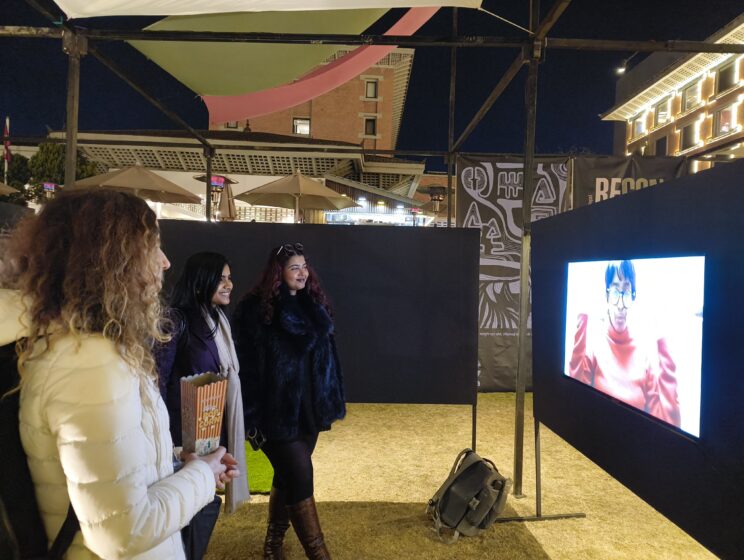
Our video exhibit is rooted in disability pride, resistance, and joy. The exhibit moved beyond limited notions of inclusion to imagine justice, freedom, and belonging. Through powerful videos, the exhibit depicted moments of challenge and celebration, victory and vulnerability—each one a testament to our lived experiences.
The exhibit invited audiences to witness and engage with the rich tapestry of disabled lives: lives built on care, consent, interdependence, and resistance. It amplified the voices of women, queer, and trans persons with disabilities, ensuring that our narratives are not only visible but also valued and celebrated. Through reclaiming our narratives and spaces, we asserted that disabled resistance is not just about survival—it is about joy, leadership, community, and freedom. The video exhibit saw many of the conference delegates attending and watching the films.
Teach-in: Challenging (Dis)embodiment, Reclaiming Disabled Joy and Pleasure: A tribute to Anita Ghai
This teach-in was organised by the faculty of Disability Sexuality Rights Online Institute (DSROI) an institute by CREA. Our Founder & Executive Director Nidhi Goyal, and Programmes Lead, Srinidhi Raghavan, who are part of the faculty were part of the organising team. We brought together over 71 participants across countries, genders, and disabilities.
This teach-in was a tribute to the fierce and visionary leadership of Dr. Anita Ghai and other disabled feminist leaders whose work has shaped our movements, our frameworks, and our imaginations. Their words continue to guide our disability justice journeys.
Srinidhi opened the session by reading from “Rethinking Disability in India” a book written by Dr. Anita Ghai in 2015 with relevance of her insights even today.
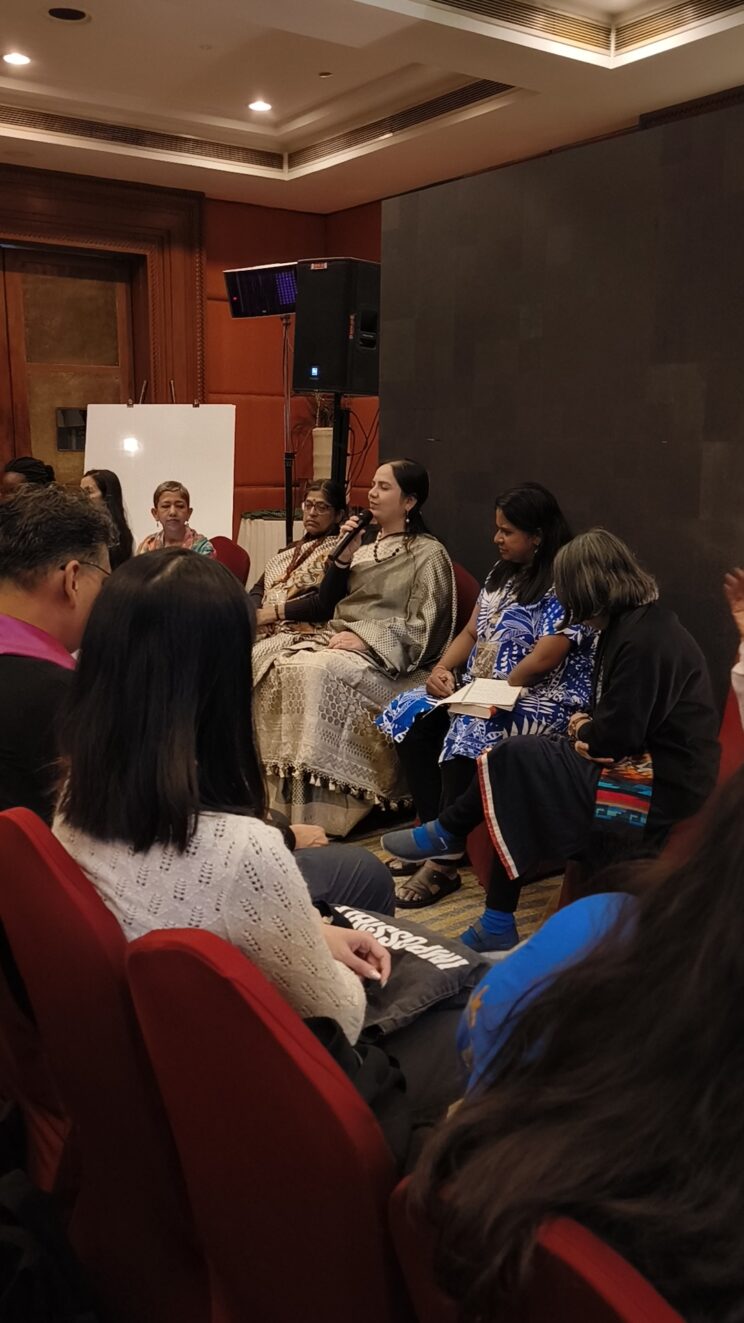
The teach in was opened by Rupsa Mallik, CREA, and brought together Nidhi, Shampa Sengupta, Director, Sruti Disability Rights Centre; Niluka Gunawardena, Disability Studies Scholar and Researcher; and Dr. Renu Addlakha. Each of them shared stories, lessons, and moments of deep learning shaped by Anita’s work. Nidhi reflected on Anita’s unapologetic storytelling: how she used personal narratives to understand and unlearn shame, conditioning, about sexuality, and the de-sexualisation of disabled girls. She also recalled the first space she shared with Anita, where she fiercely questioned feminist positions on sex-selective versus disability-selective abortions — challenging long-held assumptions and forcing the movement to confront its own hierarchies and biases.
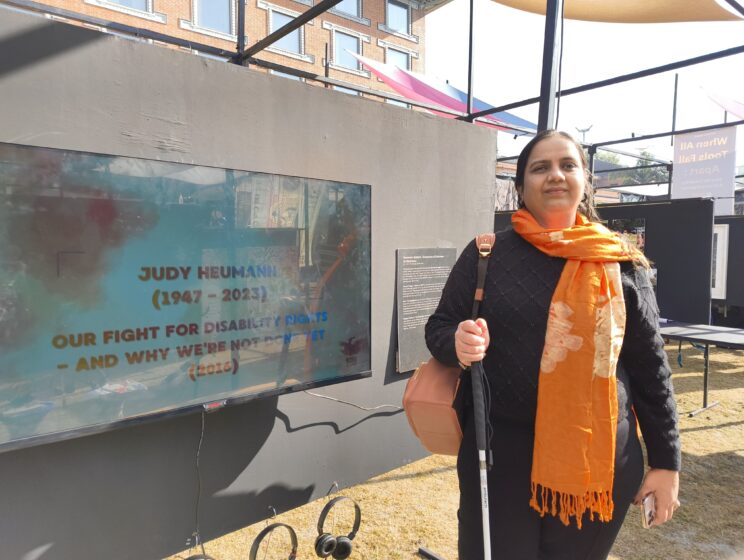
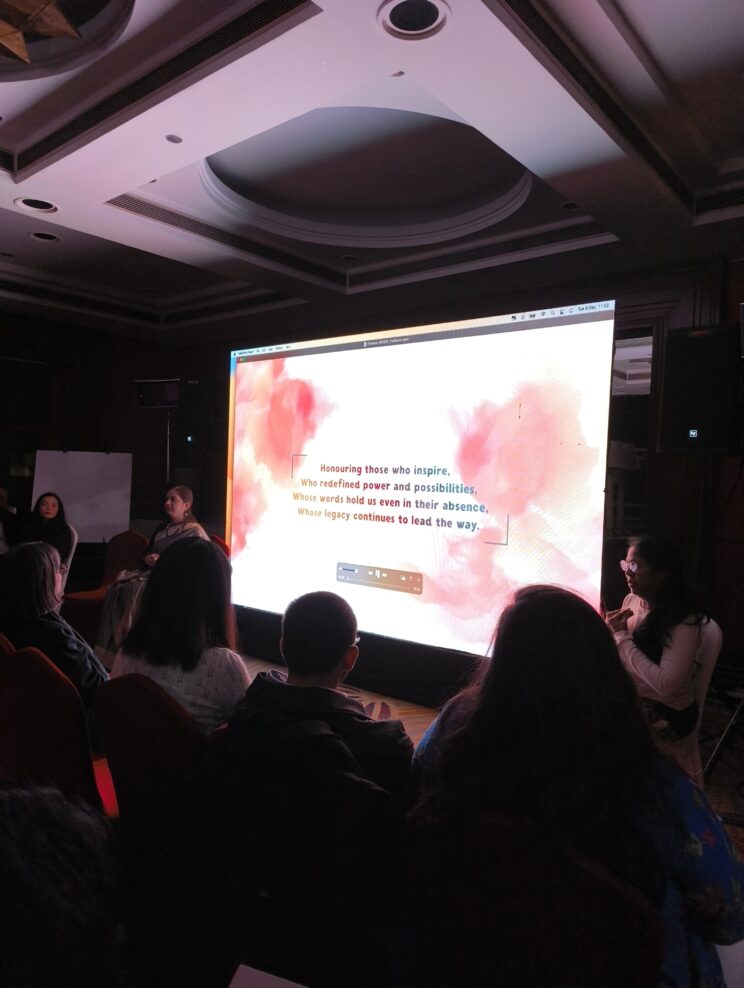
To honour Dr. Anita and other leaders such as Judy Heumann, Dr. Bhargavi Davar, and Alice Wong - we watched the tribute section from our ‘Still We Rise’ exhibit — a compilation of the stories they have shared over the years about resistance and re-envisioning a more inclusive world.
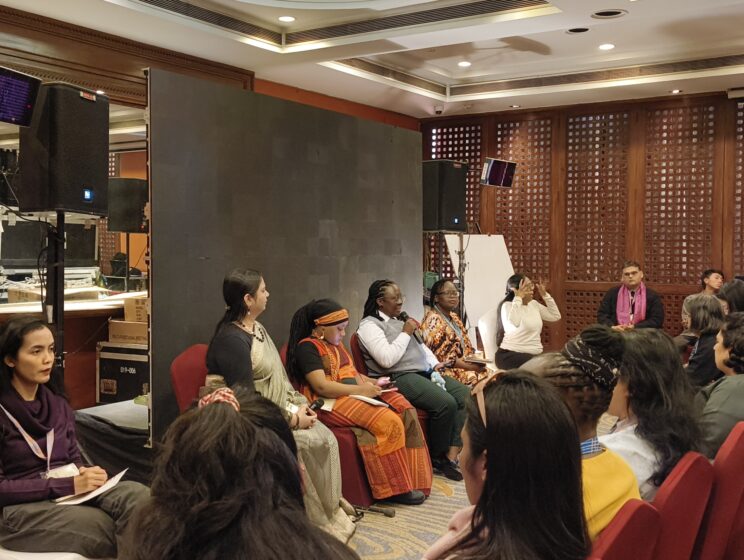
The second conversation of the teach-in was facilitated by Nidhi with brilliant feminist, disability rights leaders Phyllis Mbeke, Executive Director, Women Spaces Africa, Kenya; Loretta Ruby, Executive Director, Disability Empowerment Foundation, Uganda; and Shamim Salim, Program Manager, GIN-SSOGIE, Kenya. They spoke about navigating legal frameworks, bridging movements - such as the disability, feminist, and LGBTQ+ movements - and pushing for bodily autonomy, pleasure, and transformation across online and offline spaces.
Teach-in: ‘Deconstructing Ableism’
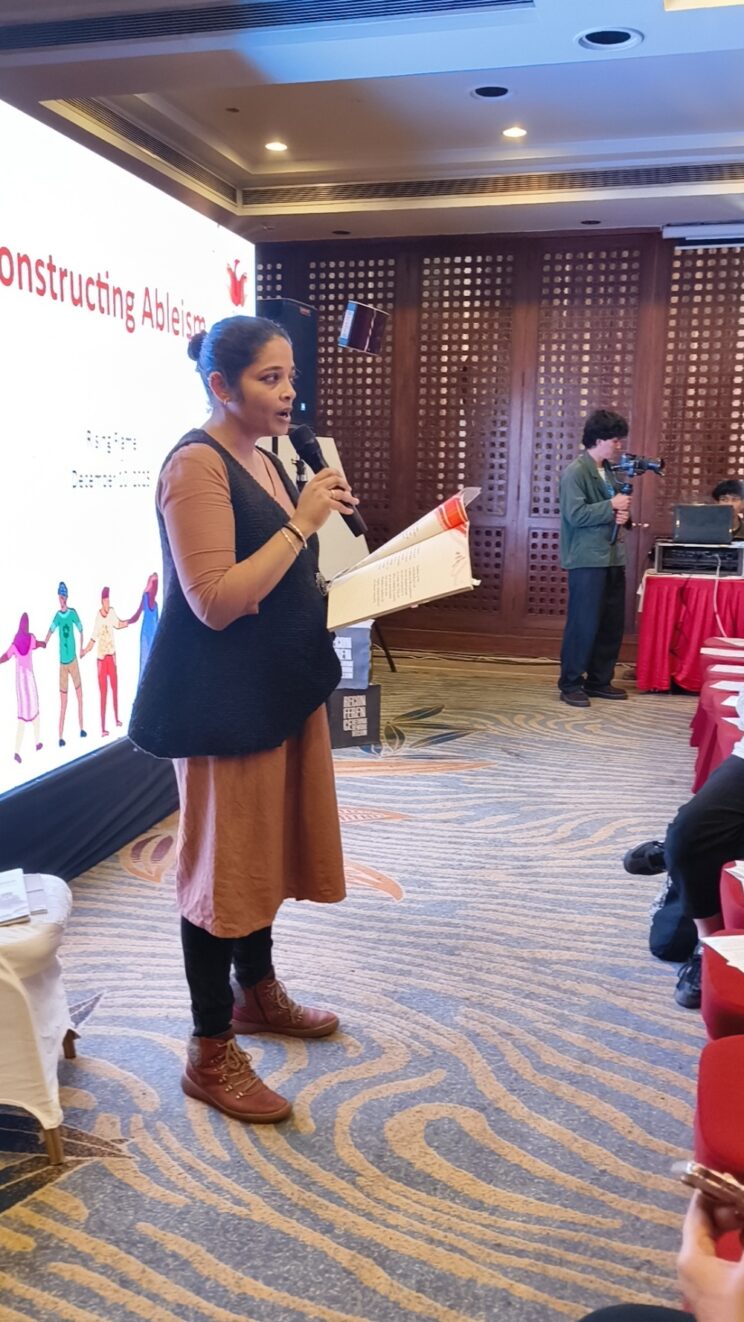
On the last day of ReConference, we organised an interactive teach-in, “Deconstructing Ableism,” facilitated by our Mental Health Lead, Dr. Prathama Raghavan. Over 37 participants joined us for a thoughtful and engaging session that invited everyone to pause, reflect, and unlearn.
We began by unpacking our associations with ability/ independence and disability/ interdependence — examining the stereotypes, assumptions, and quiet hierarchies that shape how we think, speak, and organise. Participants worked in pairs to analyse quotes from Rising Flame’s mental health manuals, reflecting on questions such as: “What tactics does ableism use to sustain itself?” and “How do these experiences shape mental health and one’s sense of self?”
Together, we explored what it might look like to do things differently: what shifts within us when we have this conversation collectively, and how reflection can become a commitment to more inclusive, accountable, and compassionate spaces. The morning was grounded, generous, and deeply affirming — a reminder that unlearning is as much about care as it is about critique.
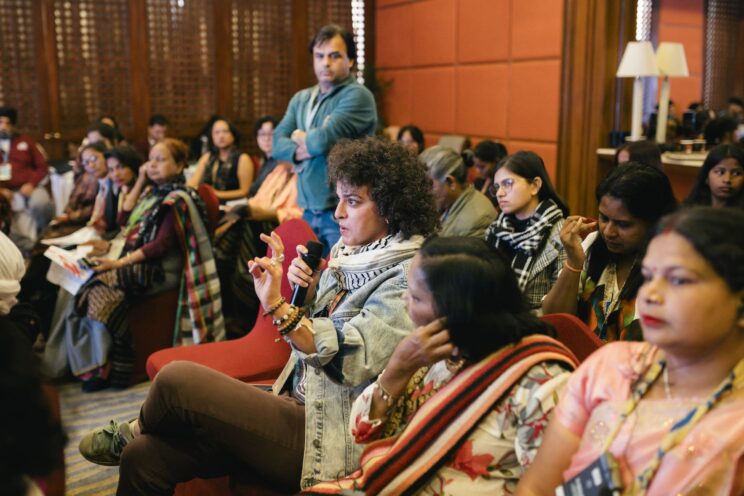
Strategy Circle: Disability Justice
We also co-organised a Strategy Circle on Disability Justice, which was a collaborative space with 24 feminists, disability rights activists and organisations from across the globe. Centering lived experiences and movement leadership, we mapped shared values, named barriers, and began shaping collective strategies and actionable steps to counter ableism across movements.