
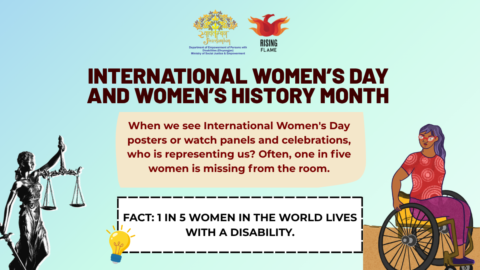
In March 2026, as part of Women’s History Month, we conducted a social media awareness campaign in collaboration with the Department of Empowerment of Persons with Disabilities, Government of India, focused on the rights and lived experiences of women with disabilities in India. Anchored in the message of ‘knowing your rights is the first step toward claiming them,’ the campaign aimed to move from visibility to empowerment through legal awareness.
While conversations on gender equality are growing, especially during Women’s History Month, women with disabilities are often excluded. This campaign addressed that gap by highlighting the intersection of gender and disability, beginning with the question of who is seen and heard. It emphasised that women with disabilities form a significant yet frequently invisibilised part of society.
Through a series of posts, the campaign unpacked key rights under laws such as the Rights of Persons with Disabilities Act (2016), the Right of Children to Free and Compulsory Education Act (2009), Sexual Harassment of Women at Workplace (Prevention, Prohibition and Redressal) Act (2013), the Protection of Women from Domestic Violence Act (2005), and the Criminal Law (Amendment) Act (2013). It covered themes including legal capacity, education, employment, workplace safety, domestic violence, bodily autonomy, and access to justice. Each post paired everyday scenarios with explanations of rights outlined in the law.
The campaign also highlighted systemic barriers that prevent women with disabilities from exercising their rights, and concluded by sharing accessible helplines and support systems.
By centering lived experiences, the campaign created space for awareness, reflection, and action – reinforcing that rights must be recognised, accessible, and realised in everyday life.