
On 7 March 2026, ahead of International Women’s Day, we conducted a full-day workshop in Goa titled “Disability Rights Are Human Rights.” The training took place at the New District and Sessions Court Complex, Tiswadi, and was organised in collaboration with the Department for Empowerment of Persons with Disabilities, Goa; the Office of the State Commissioner for Persons with Disabilities, Goa; the District Legal Services Authority (DLSA), North Goa; and the Rotary Club.
Over 120 law students, legal professionals and women with disabilities participated in the workshop, which aimed to strengthen understanding of the intersection of gender, disability and the law, and build sensitivity among future legal practitioners.
The workshop opened with our Founder and Executive Director, Nidhi Goyal setting the context for the day, framing an overarching view of the experiences of women with disabilities within legal systems and highlighting how barriers within justice institutions shape their access to rights.
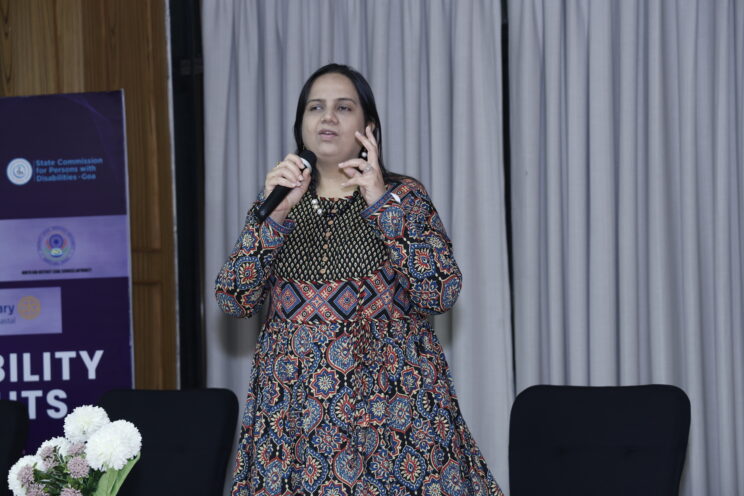
The second session, led by Anchal Bhatheja, Research Fellow, Vidhi Centre for Legal Policy, explored the key provisions of the Rights of Persons with Disabilities Act (2016), its enforcement mechanisms, and critical gaps in implementation, with a particular focus on how these impact women with disabilities.
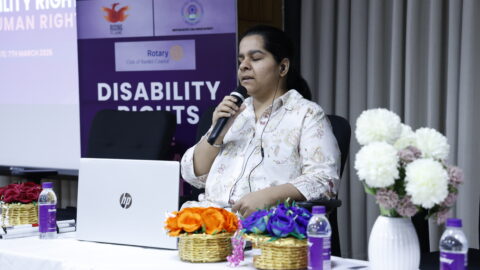
Our Programmes Lead, Srinidhi Raghavan facilitated a session examining the Sexual Harassment of Women at Workplace (Prevention, Prohibition and Redressal) Act, 2013. This focussed on the process of filing complaints to one’s workplace Internal Complaints Committee (ICC), and safeguarding the rights of women with disabilities through provisions such as accommodations for communication, ensuring confidentiality, training committee members, collaborating with disability experts, and more.
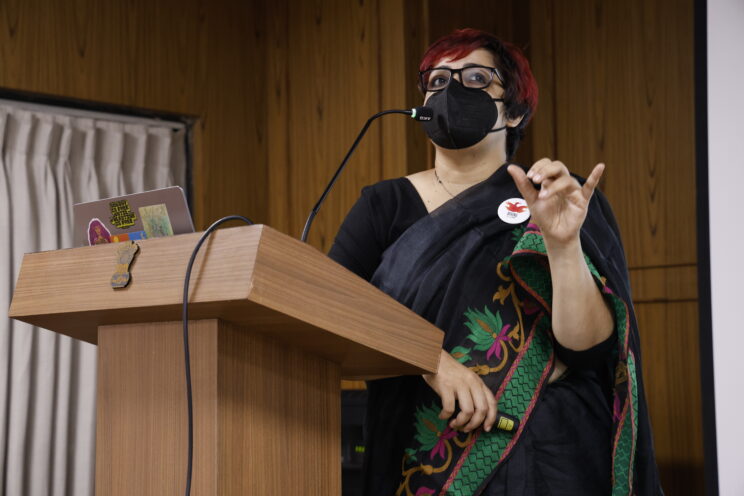
Two sessions led by Sanchita Ain, Advocate-on-record, Supreme Court of India, focused on violence and legal remedies. The first unpacked gender-based violence, domestic violence, caregiver abuse and guardianship, and the Protection Of Women From Domestic Violence Act, 2005, while the second session explored the Protection of Children from Sexual Offences Act (POCSO), 2012, the Criminal Law (Amendment) Act, 2013, evidentiary challenges faced by women with disabilities, and the inaccessibility of police stations, courts and legal processes.
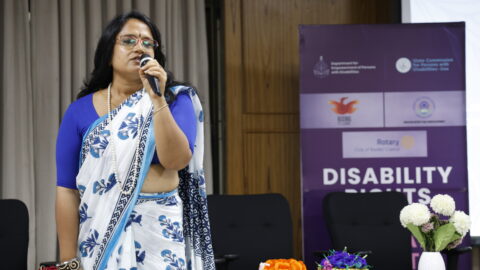
Led entirely by women facilitators with disabilities, the sessions moved beyond theory to explore the real barriers women face in accessing justice, and encouraged participants to think about building legal systems that uphold the autonomy, dignity and rights of women with disabilities.