As of October 2026, we have conducted a series of workshops designed to deepen the understanding of disability, ableism, and its profound impacts on mental health for 272 mental health professionals and relevant stakeholders from counsellors, therapists, special educators, teachers and staff of organisations working with persons with disabilities.
Through these workshops we have focussed on thematics and exercises from our 4 manuals: ‘Holding Space - Deconstructing disability experiences and navigating ableism in therapeutic conversations - Part 1’ and ‘Holding Space: Understanding invisible disabilities and intersectionality – Part 2’ and 'Connections: Unpacking the complexities of disability and relationships in therapeutic conversations' and ‘Connections Part 2: Centering Disability and Diverse Parenting Journeys.'
Deconstructing ableism with Pause for Perspective, June 2021
In June 2021, we offered a workshop based on Manual 1: 'Holding Space - Deconstructing disability experiences and navigating ableism in therapeutic conversations - Part 1', to 20 mental health professionals of the Pause for Perspective team. The workshop focussed on shifting perceptions, moving beyond the binary of “inspiration” and “pity” and understanding how we can unpack existing internalised ableism while providing care for persons with disabilities.
Deconstructing ableism, Online Workshop, December 2021
Deconstructing Ableism, a 4 day online workshop was organised in December 2021 to expand the understanding of mental health practitioners on disability experiences and ableism’s demands on disabled people’s lives and its effects on their mental health. The 20 participants ranging from counsellors, therapists and psychology students, applied through an open call. The workshop was based on the self-learning manual "Holding Space’ - Deconstructing disability experiences and navigating ableism in therapeutic conversations - Part 1.” This workshop centred the marginalization, oppression and violence experienced by people with disabilities and aimed to bring a deeper, more nuanced understanding to mental health workers.

Deconstructing Ableism: Understanding Invisibility, and Intersectionality, Online workshop, May 2024
We organised a three-day online workshop on ‘Deconstructing Ableism, Understanding Invisibility, and Intersectionality’, based on the second part of the self-learning manual series ‘Holding Space’. The workshop was open to all mental health practitioners, counsellors, and therapists. The 15 participants applied through an open call for applications.
The workshop deconstructed ableism as it manifests in shared spaces, explored how invisible disabilities affect people's mental health, as well as how various marginalisations intersect with the experience of disability. Utilising the resources in this manual, along with videos and quotes depicting the lived experiences of disabled individuals from India and around the world, this workshop helped participants to consider the diverse complexities of disability experiences and their intersections with other marginalisations, particularly those related to invisible disabilities.
Navigating ableism in therapy conversations, at Chai, Kaapi and Jugaad, January 2025
The workshop was organised at the International Narrative Therapy Conference, Chai Kaapi and Jugaad held at Pondicherry in January 2025. On 17th January, our mental health lead consultant, Dr Prathama Raghavan facilitated a workshop based on the two Holding Space manuals. In this workshop, we deconstructed ableism that sneaks into everyday lives, notice its tricks and games, make it visible, and challenge it. The sessions delved into experiences of people with disabilities and the effects of ableism on their lives. The 35 Participants worked together on discovering maps to explore ways of navigating ableism and nurturing preferred identities in therapy conversations with people with disabilities.
Deconstructing ableism teach-in: ReConference, CREA, December 2025
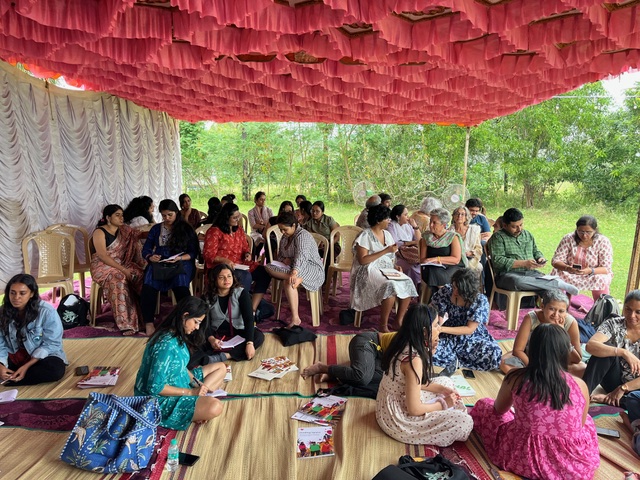
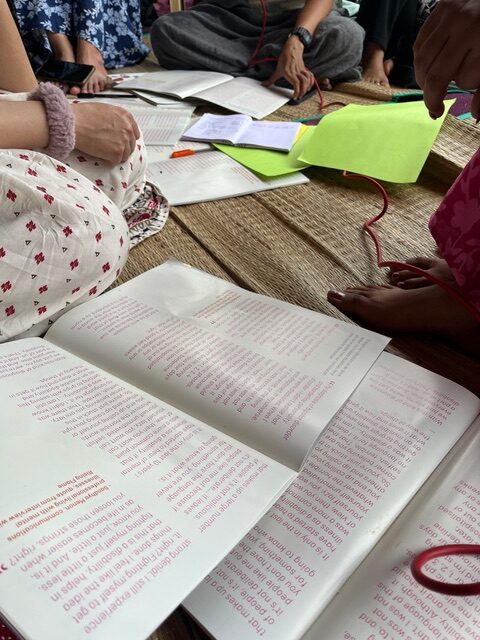
We organised a teach-in facilitated by our mental health lead consultant Dr. Prathama Raghavan on December 10th, 2025 at ReConference, a feminist global conference organised by CREA in Kathmandu, Nepal. Attended by 37 therapists, counsellors and social workers, the teach-in asked questions such as: How do you unlearn ableism you didn’t know you had learned? What stereotypes show up in your language, politics, or organising?
The interactive teach-in created space to question deeply embedded assumptions, reimagine feminist and justice spaces that are truly accountable and inclusive as well as explore how ableism operates—and how we can shift it together. This session focussed on recognising how marginalisation intersects with disability, and how practitioners and allies can be better equipped to support persons with disabilities while acknowledging the complex, lived realities of those who live with disabilities.


Disability and mental health- part of trauma course, TISS Mumbai, January 2026
Our mental health lead consultant Dr. Prathama Raghavan, facilitated a workshop on deconstructing ableism for 50 students of Tata Institute of Social Sciences as part of their course on understanding trauma. This workshop unpacked how institutionalizing dignity and improving access to mental health care that is truly inclusive and disability-affirmative helps transform the lives of people with disabilities. This workshop focussed on discovering ways of navigating ableism and nurturing preferred identities in therapy conversations with people with disabilities.
Deconstructing Ableism Teach-in: RECON Extended, CREA, April 2026
On April 9th, 2026, our mental health lead consultant Dr. Prathama Raghavan facilitated a virtual teach-in as a part of the RECON Extended, an online learning series following the in-person global feminist conference in December 2025, organised by CREA. The session was attended by 54 participants across many countries to collectively reflect on deconstructing ableism within feminist and mental health spaces.
Dr. Prathama invited participants to look into familiar ideas of “ability,” “disability,” “independence,” and “dependence,” asking: Where do these assumptions come from, and who do they serve? Participants unpacked how ableism is embedded in everyday language, practice, and institutional frameworks and how this impacts the mental health of persons with disabilities. Through videos and discussion, the session emphasised shifting the “problem” from individuals to societal barriers, and encouraged re-imagining more accessible, accountable, and inclusive feminist practices.

Deconstructing Ableism in Mental Health Practices, Online workshop, September 2026
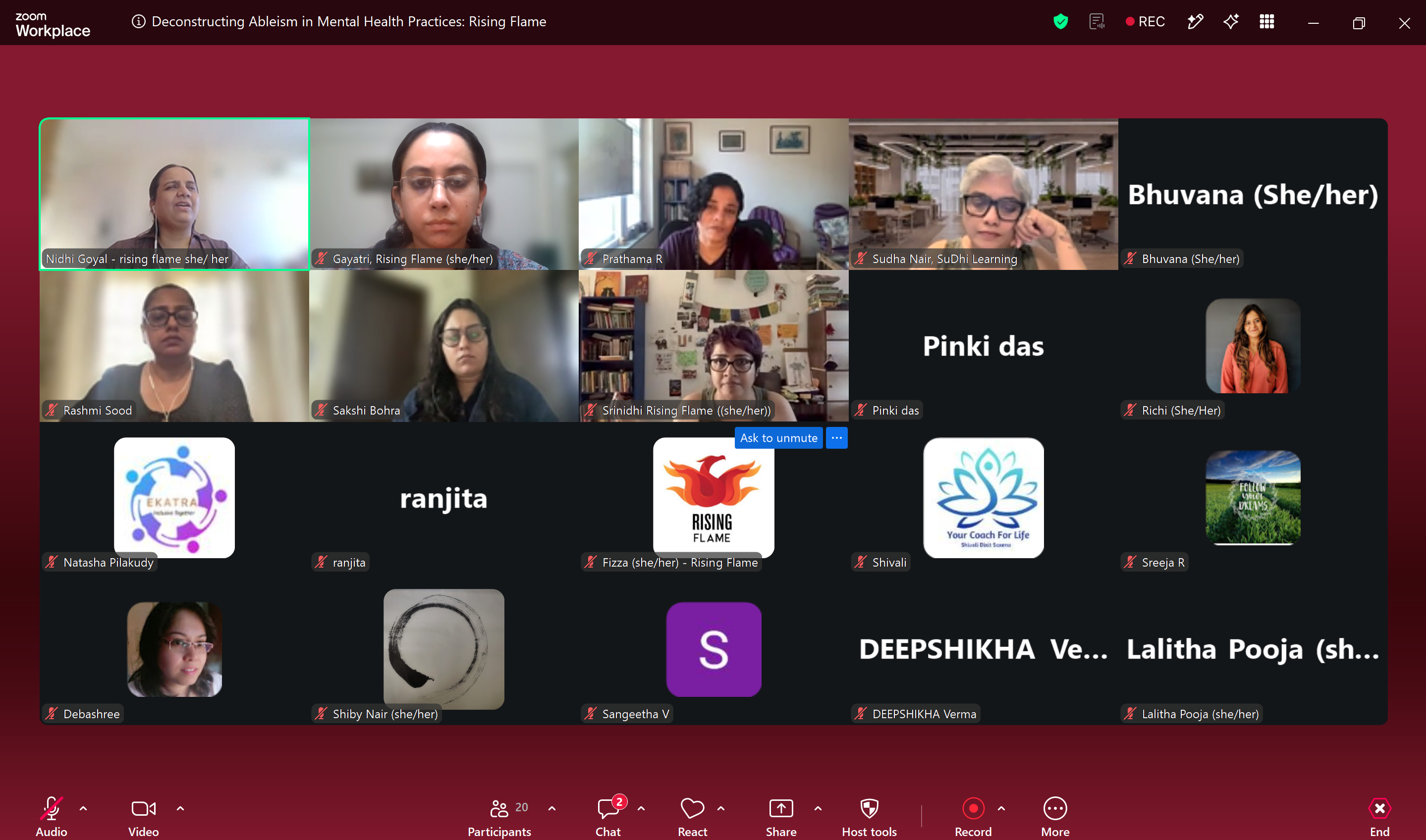
On September 28, 2026, our Mental Health Lead Consultant, Dr. Prathama Raghavan, facilitated an online workshop, Deconstructing Ableism in Mental Health Practices, attended by 17 counsellors, educators, and mental health professionals. Drawing on all four of our self-learning mental health manuals, the workshop invited participants to reflect on how ableist assumptions shape understandings of disability and therapeutic practice.
Through discussions and breakout groups centred on lived experiences from the manuals, participants explored invisible disabilities, agency and relationships, caste and disability, friendship and community, and diverse parenting journeys. We examined how disability is often located in individual bodies and minds rather than in social and environmental barriers. We explored the lens of pity and inspiration, as well as agency, relationships, identity, and the pressures placed on disabled people to overcome, perform, or prove themselves. The session encouraged practitioners to question their own assumptions, examine their role within larger systems, and consider how therapeutic spaces can better centre disabled people’s lived experiences.
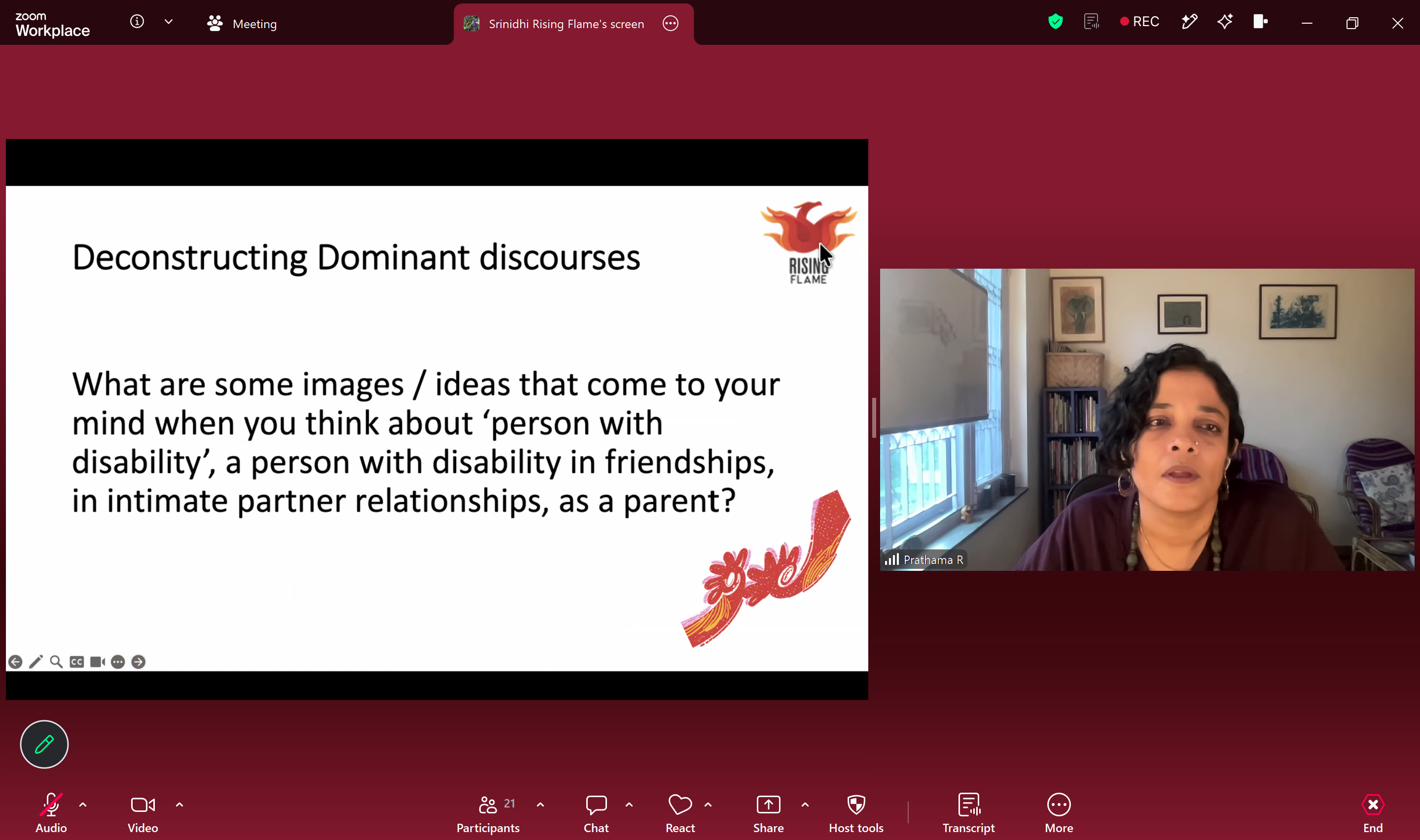
Understanding disability and holding space with The Learning Centre, Goa, October 2026
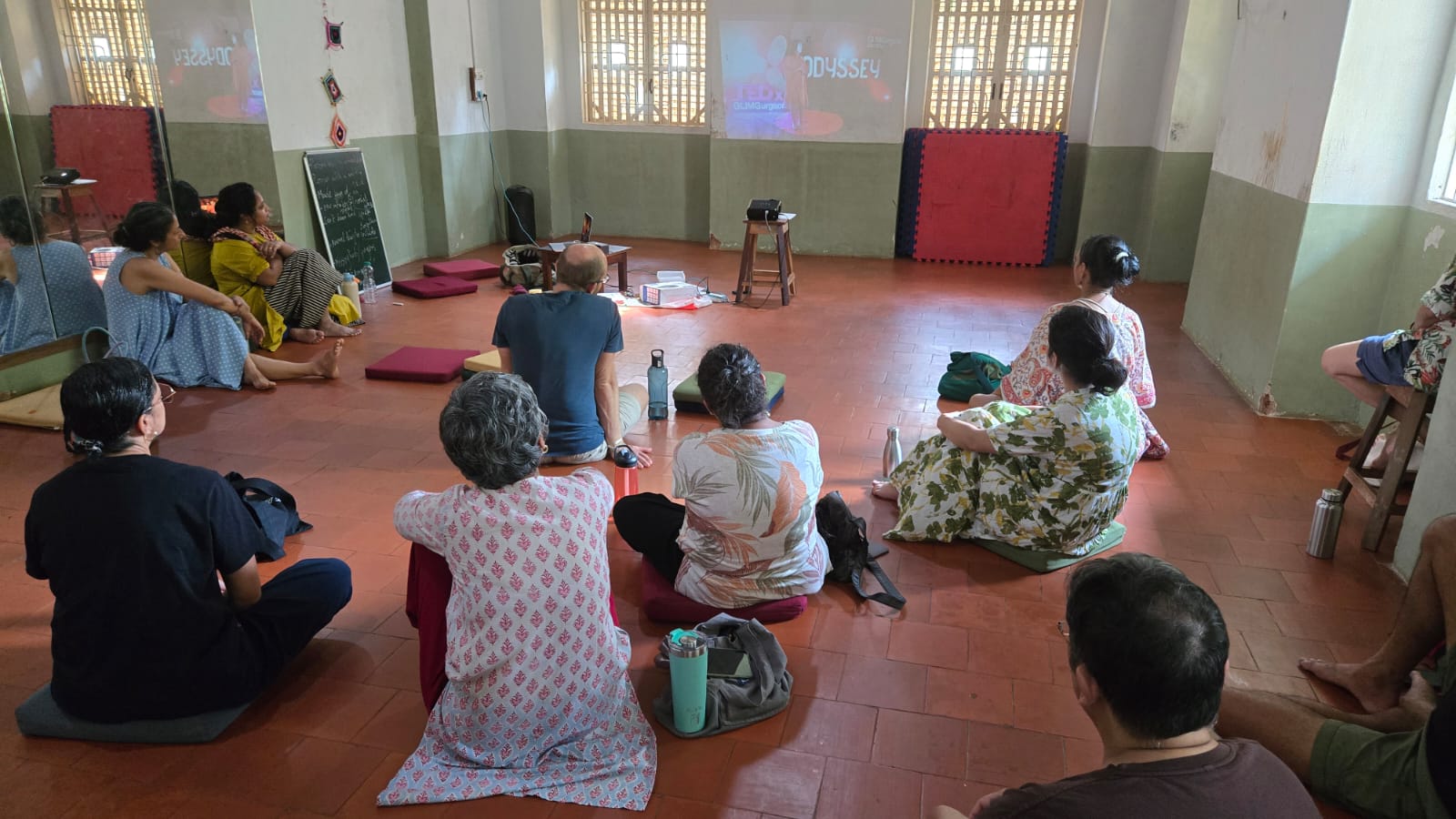
On 10 October 2026, World Mental Health Day, our Programmes Lead Srinidhi Raghavan conducted two workshops with the community at The Learning Centre in Goa, ‘Understanding disability and holding space.’ The sessions brought together 24 participants, who were parents from the TLC community and facilitators.
Drawing on themes explored in our self-learning manuals, Holding Space Part 1 and Holding Space Part 2, the workshops examined how we understand disability and whose lives we locate the problem in. Through videos, personal anecdotes and discussions, Srinidhi introduced participants to different models of disability, encouraging a shift away from pity and inspiration-based narratives towards a rights-based understanding that recognises the barriers created by society and our environments.
The conversations also explored how gender shapes the experiences of persons with disabilities, raising questions around women's access to higher education and the experiences of becoming a parent with a disability, along with ageing and acquired disabilities such as hearing loss, dementia, and mobility impairments. Together, participants created space to question assumptions, unlearn existing perceptions and imagine more inclusive ways of understanding disability.